A garage door does more than open and close. On many homes, it is the largest moving panel on the property and one of the largest openings in the building envelope. That matters every day for access, security, draught control, and wear on moving parts. It matters even more when severe weather is on the horizon.
In Queensland, official storm and cyclone guidance gives garage doors unusual importance, and for good reason. A garage door that fails under wind pressure can do more than damage the garage itself. Government guidance warns that failure at the garage opening can allow wind into the house and increase damage to walls and roof structures. Once that happens, the event can escalate from a damaged door to a much more expensive building loss.
That is why routine garage door maintenance and wind pressure rating awareness belong in the same conversation. Many owners treat them as separate issues. They think of maintenance as rollers, noise, and perhaps garage door springs, while wind rating sounds like a compliance issue to think about only during a garage door replacement. In practice, the two are linked. A wind-rated door still needs to be in sound condition. A door that moves poorly or has damaged components may not perform as intended. Likewise, a quiet, smooth-running older door may still be the weak point of the house if it is not correctly rated for local wind conditions.
Why garage doors deserve special attention before storm season
Queensland’s cyclone and severe storm preparation guidance is clear that households should prepare before the season and only go outside once it is officially safe afterward. That common-sense advice becomes more meaningful when you look at garage doors specifically. A garage opening is broad, exposed, and often faces the street or driveway with little natural shielding. If the door is compromised, wind can enter the structure quickly.
Official cyclone preparedness material in Queensland specifically says a garage door should comply with AS/NZS 4505 and be correctly rated for wind pressure, or have a bracing system that can be installed before a cyclone. That wording matters. It tells homeowners two practical things. First, not every existing door is suitable as-is. Second, where a door is not itself adequate, a properly designed bracing garage door resource approach may be part of the preparation plan.
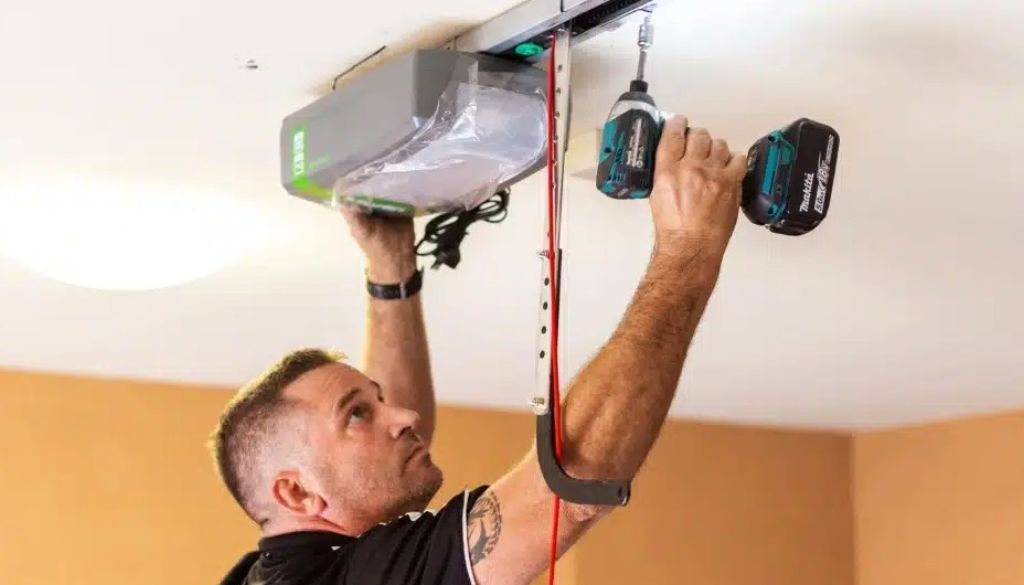
I have seen many owners focus on roof tie-downs, loose outdoor furniture, and windows while barely thinking about the garage door until a storm warning arrives. That is often too late for sensible decision-making. A door’s condition, rating, and any bracing method should be understood in calm weather, not during a last-minute run through the house.
There is also a simple visibility problem. People walk through their front door and notice cracked paint or loose hardware on gates, but they stop seeing the garage door because it has become background. If it opens every morning, they assume it is fine. The reality is less forgiving. A door can operate adequately for daily use while still being the wrong type for severe wind exposure, or while having wear that deserves professional attention.
The difference between maintenance and wind pressure rating
Routine maintenance is about preserving safe operation and extending service life. Wind pressure rating is about whether the door assembly is designed and suitable for the wind forces it may face in a given area. Those are related but not interchangeable.
A well-maintained door is easier to inspect, easier to operate, and less likely to surprise you with a failure on an ordinary day. That alone has value. If a door binds in the garage door tracks, if the bottom seal no longer sits properly, or if the garage door openers are struggling because the door is not moving cleanly, those are signs that something needs attention. They may not say anything by themselves about cyclone performance, but they do tell you the system is not in ideal condition.
Wind pressure rating, by contrast, is not something you guess from appearance. A heavy-looking steel door is not automatically a wind-rated door. A recently painted frame is not evidence of compliance. The point of the rating is that it reflects the door’s suitability for wind pressure, not how new or sturdy it seems. Queensland guidance points owners toward compliant garage doors and frames, and it also identifies replacement of non-compliant garage doors as a cost-effective resilience upgrade in some cases. That is a useful framing for household decisions. Sometimes maintenance is the right spend. Sometimes the smarter spend is garage door replacement.
What proper maintenance can realistically cover
There is a tendency to either overdo DIY maintenance or avoid it completely. Neither extreme is helpful. A homeowner can do useful observation and basic housekeeping. A qualified contractor should handle anything involving adjustment, structural suitability, or safety-critical components.
The most practical owner-level maintenance starts with paying attention to how the door behaves across a full opening and closing cycle. Does it move smoothly, or does it hesitate? Does it sit evenly when closed? Does it seem to drag, jerk, or rattle in a new way? Has the opener become louder? These observations do not diagnose the exact fault, but they can reveal that the system is changing.
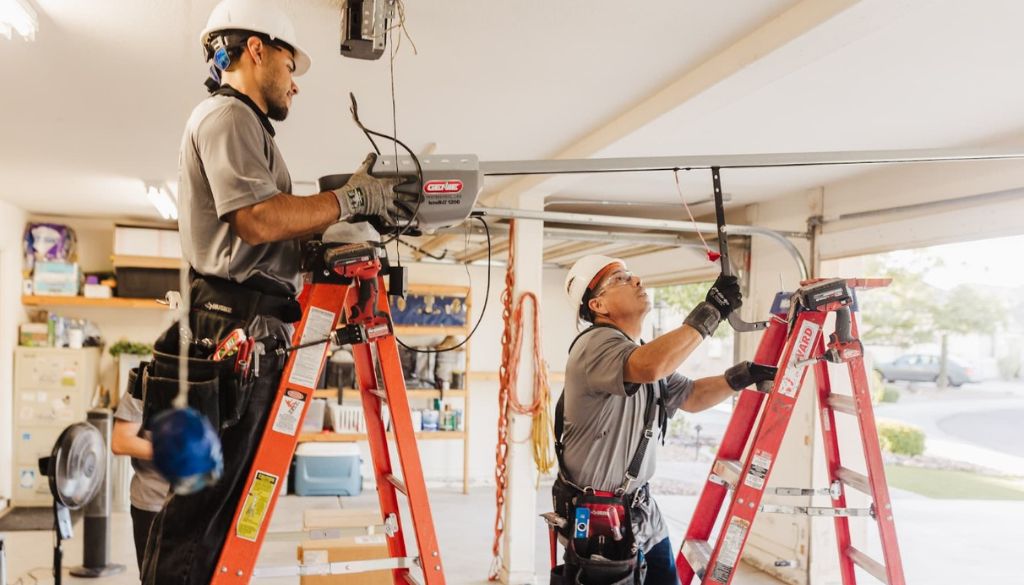
Garage door springs deserve special respect. They are one of the most discussed components because they are under tension and because trouble there often affects how the whole door feels. If a spring-related problem is suspected, that is not the moment for experimentation. The sensible line is to stop using the door if operation appears unsafe and call a qualified contractor. The same caution applies if the door has become difficult to lift, appears uneven, or no longer closes in a controlled way.
Garage door tracks should also be viewed with a practical eye. Homeowners often notice visible grime, debris, or a bump in operation and assume cleaning or forcing the issue will solve it. Sometimes a simple clean-up around the track area is worthwhile, but any sign of damage, misalignment, or persistent poor travel should be assessed professionally. The track path is fundamental to how the curtain or panel door moves, and forcing a door through a fault can make the problem worse.
Garage door openers fit into this picture in a slightly different way. Before severe weather, Queensland guidance advises unplugging electrical items. That makes garage access planning relevant. If your opener is the only way you normally enter the garage, think through manual access before storm season. Test that you know how to operate the door safely if power is unavailable, but do not improvise repairs or adjustments to the opener itself.
The hidden problem with “it still works”
One of the hardest judgment calls for owners is deciding when working equipment is no longer acceptable. A garage door can still open on command and still be the wrong asset to rely on during severe weather.
I have had conversations with property owners who say, quite reasonably, that their door has never given trouble. That history feels reassuring. Yet resilience work is not only about past performance. Queensland housing guidance specifically identifies replacing existing garage doors and frames with wind-rated versions as part of resilience work, and it points out that non-compliant garage doors can be a cost-effective target for replacement. That should prompt owners to ask a more useful question: not “Has the door been fine so far?” but “Is this door actually the right door for the risks this property faces?”
There is a big difference between normal service and extreme event performance. Many parts of a house are asked to do more under cyclone conditions than they ever do in routine life. Garage doors are a prime example. If the door or frame is non-compliant, or if the only strategy is hoping the storm takes a different path, the household is carrying avoidable risk.
What to ask when assessing an existing door
For most homeowners, awareness starts with a straightforward review. You do not need to become a building code specialist to identify whether the issue deserves closer attention. What you need is enough clarity to know whether maintenance, professional inspection, bracing, or replacement is the next step.
- Is the garage door known to comply with AS/NZS 4505 and correctly rated for wind pressure for the property’s needs? If not, is there a bracing system designed for the door that can be installed before a cyclone? Are the door and frame in sound condition, without obvious damage or ongoing operational issues? Do the garage door openers and access arrangements still allow safe entry and exit if power is lost? If the door is older or non-compliant, would garage door replacement be the more resilient long-term choice?
Those questions are useful because they separate appearance from performance. A homeowner may answer only one of them confidently, and that is enough to justify getting qualified advice. The goal is not to perform a technical certification yourself. The goal is to stop flying blind.
When maintenance is enough, and when replacement makes more sense
Not every concern points to full replacement. If a door is already the correct type and rating, and the issue is wear that can be properly serviced, maintenance may be entirely appropriate. Doors are moving systems. Rollers, seals, opener settings, and alignment-related issues often arise over time, especially with frequent use.
The more difficult scenario is the older door that still operates but cannot be confirmed as correctly wind-rated, or is known to be non-compliant. In that situation, pouring money into repeated service calls can be false economy. Queensland resilience guidance is useful here because it explicitly frames replacement of non-compliant garage doors and frames as a practical resilience measure. That does not mean every old door must be replaced tomorrow. It does mean owners should weigh the value of ongoing upkeep against the benefit of upgrading to a wind-rated solution.
This is where judgment matters. A rental property owner may be tempted to keep an old door going because tenants report no issue. A homeowner preparing to stay in the property long term may prefer to invest once in a compliant system rather than manage uncertainty every storm season. Both are financial decisions, but only one treats the garage opening as a resilience priority.
A properly considered garage door replacement can also be the moment to deal with surrounding weaknesses, especially the frame. Replacing the door alone while ignoring frame suitability may leave part of the vulnerability in place. Queensland guidance refers to garage doors and frames together for a reason.
Storm preparation is broader than the door itself
Even the right door performs best when it is part of a broader preparation routine. Queensland agencies advise securing loose outdoor items, parking vehicles under shelter if possible, and unplugging electrical items before severe weather. Each of those points affects the garage in practical ways.
If the garage is your best sheltered parking option, it should not be so cluttered that a vehicle cannot be moved in when weather turns. That sounds obvious, but many garages become storage rooms first and vehicle shelters second. Clearing space early in the season is a quiet form of risk reduction.
Loose outdoor items matter because the area around the garage often collects bins, garden gear, and portable equipment. Objects that become airborne during strong winds can strike doors, tracks, or adjacent openings. The door’s rating matters, but impact exposure and overall site tidiness matter too.
Unplugging electrical items raises another everyday issue. Many people think about televisions and kitchen appliances, not garage door openers. Yet if the opener is connected and weather threatens, your access plan should include what happens if power is interrupted. Know how you will secure the home and how you will use the garage safely afterward, always following the official advice not to go outside until it is safe.
Queensland guidance also recommends fitting shutters or other protection to door openings and using a qualified contractor when securing vulnerable parts of the home. That reinforces a broader principle: resilience improvements should be deliberate and competent, not improvised under pressure.
Attached garages, draughts, and the daily value of a well-kept door
Not every garage door conversation has to begin with cyclone risk. There is a quieter, everyday reason to care about door condition, especially in attached garages. Australian Government energy guidance notes that draught stoppers at the base of doors can help reduce heat loss. That is directly relevant where the garage adjoins living spaces or where the internal door between house and garage sees a lot of air movement.
A bottom seal that no longer meets the floor cleanly may seem minor. Over time, it can contribute to draughts, dust entry, and less stable conditions near the garage. This is not a substitute for proper wind rating, and it should not be confused with storm hardening. Still, it is one more reason routine upkeep pays off. A door that closes evenly and seals better tends to support comfort and housekeeping, not just access.
This daily-use perspective also helps owners make better financial decisions. If you already need work because of poor sealing, rough movement, or opener strain, that is a good time A1 garage doors gold coast qld to ask the bigger resilience questions. Sometimes the answer is service. Sometimes it is upgrade. What you want to avoid is spending on piecemeal fixes while never addressing a known mismatch between the existing door and the weather risk profile.
Practical warning signs that deserve prompt attention
Some warning signs are obvious, others are subtle. Owners do not need to diagnose them, but they should not ignore them either.
- The door has developed uneven movement, sticking, or unusual noise that persists. The garage door openers appear to strain, hesitate, or behave inconsistently. The door does not close evenly onto the floor, leaving visible gaps or poor sealing. There is visible damage or distortion around the door, frame, or garage door tracks. You cannot confirm that the current door is correctly wind-rated, compliant, or supported by an appropriate bracing system.
A list like this is not a substitute for inspection. It is a prompt to stop normalising a problem. In my experience, many owners accommodate a door’s declining performance for months because the issue unfolds gradually. They press the remote twice instead of once, tug the handle a little harder, or decide the scraping sound is just part of the system aging. That kind of adaptation is exactly how important maintenance gets deferred.
Why qualified advice matters more than improvised fixes
There is a strong DIY culture around garages because the door is right there, the hardware looks accessible, and many faults seem mechanical rather than hazardous. That instinct can be costly. Queensland resilience guidance encourages working safely and using a qualified contractor for securing vulnerable parts of the home. That is particularly sensible with garage doors.
The risks are not only about injury during repair. They are also about false confidence after a poor fix. A homeowner who forces a track issue back into apparent alignment, modifies a panel attachment, or alters opener settings without understanding the system may end up with a door that seems improved for ordinary use but is less reliable when it matters.
Product safety principles also support a cautious approach. Where products are subject to safety standards, they must meet specific criteria before sale. For homeowners, the practical takeaway is simple: treat garage door components and accessories as safety-relevant products, not generic bits of hardware to be substituted casually. If you are replacing parts or considering add-ons, product suitability and professional installation matter.
Planning ahead beats scrambling before a warning
The best garage door decisions happen well before storm season. Queensland’s official advice to prepare before the season exists because timing changes the quality of decision-making. In calm months, you can check documentation, arrange inspection, compare repair against garage door replacement, and understand whether any bracing system is required and how it is installed. During a warning period, your choices narrow fast.
Homeowners who plan ahead usually gain three things. They know whether the door is fit for purpose. They know how to operate it safely if power is interrupted. And they are less likely to overlook the garage as part of the property’s resilience strategy.
That broader awareness matters because the garage often sits at the crossroads of access, storage, vehicle protection, and structural vulnerability. It is easy to treat it as a convenience feature. Severe weather has a way of exposing that mistake.
A garage door is not just a moving panel at the front of the house. In storm-prone areas, it is part of the home’s defensive line. Regular maintenance keeps it working as it should. Correct wind pressure rating awareness tells you whether it belongs in that role at all. When both are taken seriously, owners put themselves in a stronger position, not only for the next storm warning, but for the ordinary daily use that reveals problems before they become emergencies.